Magical-creature ownership licensing requirements
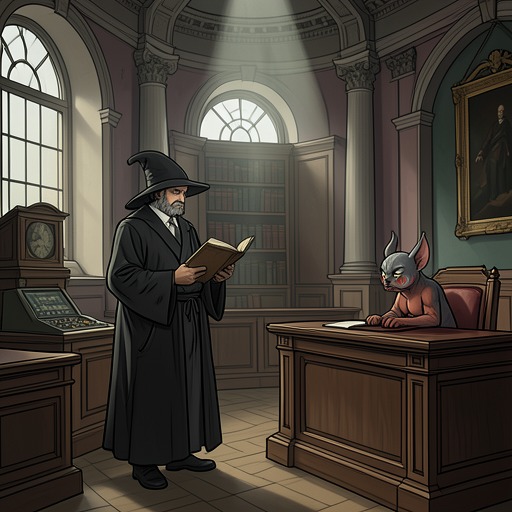
Fantastic Beasts and Where to Find ThemMagical-creature ownership licensing requirements are a form of creature-specific regulation administered by the Department for the Regulation and Control of Magical Creatures. The examples in Fantastic Beasts and Where to Find Them show that a licence can be tied to an owner’s ability to manage a creature in places inhabited by Muggles, or to a creature’s particular risks and visibility. It is not presented as a universal permit for every magical animal: the stated requirements attach to particular species and address the circumstances that make their ownership a concern.
Purpose and Administration
The licensing examples sit within a broader system of magical-creature management. The Department for the Regulation and Control of Magical Creatures is responsible for work involving creatures that remain conspicuous to Muggles, and it also keeps strict watch on trade in fantastic beasts. The book describes these controls in a reference-work format, placing individual ownership rules alongside descriptions of creatures’ habits and effects. In that context, the licence is a concrete administrative measure: it makes legal ownership conditional on requirements suited to the species, rather than treating all creatures as presenting the same problem.
The specific examples do not establish one general licensing test. For Crups, the Department issues licences after an applicant completes a simple test demonstrating an ability to control the dog in Muggle-inhabited areas. For Fwoopers and Kneazles, the text states that owners require licences, but does not describe a test or set out the application procedure. These distinctions matter: the Crup provision explicitly tests an owner’s competence in a particular setting, while the other entries identify a licensing obligation without specifying how compliance is assessed.
Species-Specific Requirements
Crup licences depend on a simple test, administered through the Department, to show that the wizard applying can control the Crup in areas inhabited by Muggles. The stated focus is not merely possession of the animal but the owner’s capacity to manage it where exposure could affect the non-magical population. The rule therefore makes control a condition of permitted ownership in a defined environment. The account supplies no further detail about the test or the consequences of failing it, so its described purpose is clearer than its enforcement procedure.
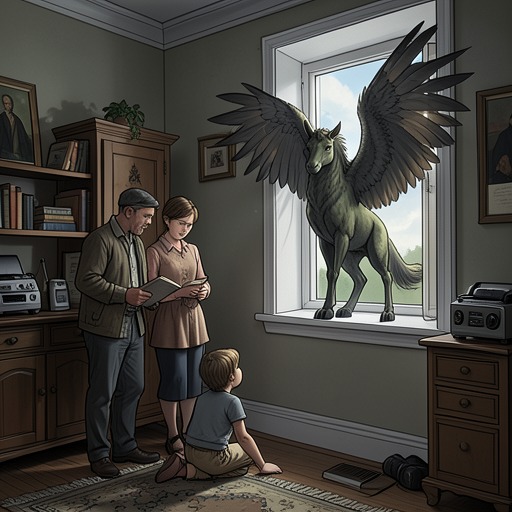
Fwooper ownership also requires a licence, with the book explicitly connecting the requirement to responsible handling. The reason becomes apparent in the species entry: although a Fwooper’s song may initially be enjoyable, prolonged listening eventually drives the listener to insanity. Owners are expected to keep the bird with a Silencing Charm placed upon it, and the charm must be reinforced monthly. The licence requirement thus appears alongside an ongoing safeguard, not as a substitute for managing the hazard: keeping the bird responsibly entails maintaining the measure that prevents its song from causing harm.
Kneazle owners likewise need licences, in this case because the animals are sufficiently unusual in appearance to attract Muggle interest. Their appearance creates a visibility problem distinct from the Fwooper’s harmful song and the Crup rule’s emphasis on control in Muggle-inhabited areas. The Kneazle entry also notes that a litter may contain as many as eight kittens and that Kneazles can interbreed with cats, but it does not state that either fact is the reason for licensing. The stated rationale is their capacity to draw attention from Muggles.
Regulation Beyond the Permit
The book places ownership licensing within a wider framework that includes controls on selling and breeding. The Department keeps strict watch on trade in fantastic beasts, and the 1965 Ban on Experimental Breeding made the creation of new species illegal. Those measures address different activities from holding a licensed creature: trade control concerns transactions, the breeding ban prohibits the creation of new species, and a licence governs the keeping of specified animals. Read together, they show regulation extending across several points of contact between magical creatures and wizard owners, although the evidence does not provide a single comprehensive licensing code or spell out how these measures interact in individual cases.
The examples also give the system a distinctly practical, species-by-species character. A Crup applicant must demonstrate control where Muggles live; a Fwooper owner must contend with a song that can become dangerous and a silencing charm that needs monthly renewal; and a Kneazle owner must account for an appearance likely to attract human notice. The licence is therefore not described as a uniform judgment that a creature is simply safe or unsafe. It forms one part of a management approach in which the relevant concern varies from control, to harm prevention, to concealment from public attention.
Limits of the Evidence
The cited entries establish that licences are required for Crups, Fwoopers, and Kneazles, and identify a distinct rationale or condition for each. They do not state the full list of licensable creatures, whether other species are subject to comparable rules, the duration or renewal terms of any licence, or the penalties for keeping a creature without one. Nor do they describe a common application process: only the Crup entry specifies a test. The safest account is therefore a limited one: licensing exists as a selective ownership control, administered by the Department, with at least one competence-based procedure and additional requirements tied to responsible handling and Muggle visibility.
The reference-book presentation makes these rules legible through concrete creature profiles rather than through a single abstract statute. A reader encounters the permit alongside the animal’s defining trait—the Crup’s need to be controlled near Muggles, the Fwooper’s perilous song, or the Kneazle’s conspicuous appearance. That arrangement emphasizes the rationale behind each stated restriction while leaving broader administrative details unstated. Licensing emerges as one instrument in the management of magical creatures, tailored to particular risks rather than fully explained as a universal legal regime.